Why the economy suggest growth and consumer feel recession ?

Posted on October 14th, 2011 in Economy | No Comments »

There’s a great mismatch between the way people feel about the economy and many of the underlying trends. The sentiment says recession, but much of the underlying data suggest growth.

The Thomson Reuters/University of Michigan measure of consumer sentiment, released Friday morning, showed consumer confidence fell and that consumers’ expectations for the future are at their lowest level in 30 years. They’re not the only ones worried. Lakshman Achuthan of Economic Cycle Research Institute, perhaps the most reliable forecaster on changes in the business cycle, recently told the Daily Ticker he believes a recession is unavoidable.

And yet the numbers continue to tell the story of a grinding, continuing recovery that, in some ways, appears to be accelerating. Amid the rising gloom, the data flow in recent weeks has generally been positive. Retail sales, reported this morning, were up strongly in September, up 1.1 percent from August; August’s figure was revised upwards. Compared with a year ago, retail sales are up 8 percent. They were led by strong car sales. After putting up a bagel in August, the economy added 103,000 payroll jobs in September, including 137,000 private sector positions. Overall GDP growth, which fell dangerously close to flatlining in the first quarter, in which it grew at just a .4 percent annual rate, grew at a 1.3 percent rate in the second quarter. Macroeconomic Advisers, which tracks and continually updates estimates in real time with each new data point, currently has the third quarter expanding at a 2.7 percent rate. The Conference Board Leading Economic Index pushes higher every month.

So what’s going on? Is all the data fudged? Is it simply backward-looking information telling us a positive story? I think of it as follows: The grind-it-out recovery continues. The underlying trends are moving in a positive direction, in many instances better than most people think and expect. But there’s an overwhelming sense of fragility due to three significant factors.

First and foremost, there’s the weak labor market. Go back and look at the Bureau of Labor Statistics’ depressing monthly employment market update. It’s not simply that the unemployment rate is at an elevated 9.1 percent, or that the U-6, a broader measure of un- and underemployment, is at 16.5 percent. Rather, the equation between management and labor has shifted drastically in the past several years. Simply put, capital is beating the living daylights out of labor. Personal income fell in August from July. Corporate profits bounced back impressively since 2009, but between June 2009 and June 2011, real household median income fell 6.7 percent. Workers’ share of income has fallen to historic lows. (Check out this chart, courtesy of Mark Thoma at Economists’ View).

Second, call it muscle memory, or post-traumatic stress disorder, or the new normal. But Americans remain shocked and traumatized by the events of the fall of 2008 and the deep recession of 2008-2009. A dog that’s been repeatedly abused cowers the minute someone — even someone with good intentions — raises his hand. The American public is like a dog that’s been kicked one too many times. The cascade of failures, the massive job loss, and the huge declines in home equity, have altered sentiment, psychology and actual behavior. Each time there’s a new trauma — a month in which there is no jobs growth brinksmanship that almost results in default, a downgrade by Standard & Poor’s, a damaging hurricane — Americans suffer flashbacks.

Third, beyond imagined threats, the world is a pretty dangerous place, full of potential shocks that can harm the U.S. economy. And because consumers and companies were caught unawares by the 2008 credit shock, they continue to take preventative action and be on the lookout for warning signs. Many companies in 2008 suffered near-death experiences in 2008 due to a lack of cash; so today they stockpile it, and hesitate to invest or boost dividends. Meanwhile, there are plenty of potential shocks for which people should prepare: a Greek default, a new recession in the heart of Europe, instability in the Middle East, a sharp slowdown in China.

As the mood sours, the U.S. economy continues to grind its way, slowly, out of the deep hole of 2009. At present, the economic data we have points to a continuation of the current expansion, now in its 30th month, even if many people feel as if the recession never ended.

Daniel Gross is economics editor at Yahoo! Finance.

Grand Opening of TechShop San Jose

Posted on September 16th, 2011 in Fun Event | No Comments »

Yoy are invited to the Grand Opening celebration of TechShop San Jose on Saturday, Sept 24 2011 from (10-6). Festivities include demonstrations and displays of a variety of creations ranging from a JetPack to handmade craft items like jewelry and wooden ties. During this free, family friendly event there will be tours of the facility, special guest speakers including presentations from some of the most influential people in Silicon Valley.

Visit us at www.techshop.ws for more information on speakers, presenters and special demonstrations that will impress and inspire.

A Big Fat Hit ! A Triumph by USA Today

Posted on September 16th, 2011 in Musical | No Comments »

Shrek the Musical

Sept 20-25, 2011 call 408-792-4111 for Tickets
Special pricing for groups of 10 more !

All shows held at San Jose Center for the Performing Arts.
www.broadwaysanjose.com

Appraisers for Banks considers REO or Short Sale as Comps while County Assessors do not.

Posted on September 8th, 2011 in Real Estate | No Comments »

Since the real estate bust, many people have complained that they couldn’t buy, sell or refinance a home because an appraiser used bank-owned or short-sold homes as comparables in the valuation process, which dragged down the value of their home.

Their protests have grown so loud that in four states (excluding California), legislators have introduced bills that would prohibit appraisers from using distressed properties as comps. Although none went very far, a bill in Congress, HR1755, would do the same thing.

Now I’m hearing from people upset that they can’t get their property taxes reduced because their county assessor will not use a short-sale or bank-owned property as a comp.

James Reece of San Francisco says that when he refinanced his condo in November, it was appraised for $660,000. The appraiser used three condos as comps: One in his building that sold for $700,000 in May 2010, another in his building that sold for $620,000 in September 2010 and a similar one nearby that sold for $699,000 in October.

Informal review
But when Reece got his property tax assessment for 2011-12, his condo was assessed at $700,000 – the same as the previous year. Reece thought it should be lower than $700,000 based on the appraisal done for his lender. He asked San Francisco County Assessor Phil Ting’s office to informally review his assessment and submitted the appraisal along with the three comps.

The first person he spoke to refused to review the application. Reece then asked for a supervisor, who said he was throwing out the $620,000 comp because “it probably was a short sale” and that “outliers” didn’t count, Reece says.

Reece says he was instructed to file a formal appeal with the appeals board.

Reece is wondering why appraisers for banks consider distressed sales as comps while county assessors do not.

The answer: In California, some assessors will consider distressed sales but it varies widely by county, neighborhood and house. In general, assessors will always look at non-distressed sales first and if there are enough, disregard bank-owned and short sales. But if there are not enough normal sales, or the home is in an area dominated by distressed sales, they will take these into account. It’s not always easy to identify distressed sales, and some assessors will do more digging to discover the nature of a sale than others.

Under Proposition 13, property is assessed upon a change in ownership at its fair market value. That is usually the same as the sale price, although “in the case of a foreclosure or other distressed sale, the sales price may not equal fair market value,” says Marin County Assessor Richard Benson.

In between changes of ownership, assessors can raise values only by an inflation rate (not to exceed 2 percent a year) plus the value of major improvements or additions.

Under Prop. 8, owners who think the market value of their property has fallen below its assessed value can ask for a temporary reduction to the fair market value.

Fair market value
Under state law, the “fair market value means the amount of cash or its equivalent that property would bring if exposed for sale in the open market under conditions in which neither the buyer nor seller can take advantage of the exigencies of the other,” says Alameda County Assessor Ron Thomsen.

Under the code, it doesn’t appear that distressed sales should be used as comparables because they involve exigencies or pressing needs, Thomsen says. In reality, Thomsen sometimes uses them, “especially if there are no verifiable comparables that are not short sales or foreclosures.”

Santa Clara County Assessor Larry Stone says “in normal times, a foreclosure was an aberration … and we would ignore it.” Today, “in areas where we don’t have a lot of foreclosures (such as Palo Alto or Los Altos Hills), we still ignore it.” In areas with a lot of foreclosures, such as the southern and eastern parts of the county, “it can’t be ignored.”

Read more: http://www.sfgate.com/cgi-bin/article.cgi?f=/c/a/2011/08/31/BU1H1KUA2V.DTL#ixzz1XQgo1zcK

A 4 Bedroom House with Added Family Room in West San Jose near Campbell.

Posted on September 6th, 2011 in Real Estate | No Comments »

Come home after work and enjoy one of the most desirable neighborhoods in W San Jose. Pamper yourself and family with this warm and well maintained home while enjoying the lifestyle of Silicon Valley, with close proximity to West Gate Shopping Mall . Don’t miss Downtown Los Gatos & Saratoga only 10 to 15 minutes away . This is the house you have been waiting for to call it home. For more info, contact Michael Koo at (408) 593-0304 or email to brokerkoo@gmail.com

1 Million Foreclosures delayed to 2012

Posted on July 15th, 2011 in Foreclosures | No Comments »

1 Million Foreclosures Delayed Until 2012
An estimated 1 million foreclosure-related notices for defaults, auctions, and home repossessions that should be filed by lenders this year will be pushed back until next year, according to the latest report by RealtyTrac.

While the delays could give home owners more time to catch up on their payments and try to avoid foreclosure, housing experts warn this means the looming shadow inventory of distressed properties likely will continue to plague the real estate market even longer.

“The best-case scenario is we don’t get back to normal levels of foreclosure activity until 2015, which means the housing market recovery gets delayed by at least a year,” says Rick Sharga, a senior vice president at RealtyTrac.

Foreclosure Notices Drop, Threat Still Looms
Overall, the number of homes repossessed by lenders in the first half of this year dropped 30 percent compared to the same period in 2010. But foreclosure processing delays — with lenders taking longer to take action against delinquent borrowers — is stalling the housing recovery, experts note.

About 1.2 million homes received a foreclosure-related notice in the first six months of this year — in other words, one in every 111 U.S. households, RealtyTrac reports.

Nevada continues to face the most foreclosures; one in every 21 households in that state received a foreclosure notice in the first half of the year.

The foreclosure process continues to lengthen too. From April and June, homes took 318 days on average to go from the first stage of foreclosure to ultimately where it was repossessed by the lender — that’s up from 298 days in the first three months of the year. (In New York, the foreclosure process took the longest at an average of 966 days or 2.6 years; Texas boasted the shortest at 92 days.)

Source: “Delays in Bank Processing Push Likely U.S. Foreclosures Until 2012, Stalling Recovery,” Associated Press (July 14, 2011)

Summer’s Hottest Event !

Posted on July 14th, 2011 in Fun Event | No Comments »

Three Stages with Live Music. Renowned Cooking Competition. Award Winning Children’s Area. Arts & Crafts. Extraordinary Food !

July 29-31, 2011 www.gilroygarlicfestival.com


Free Music Festival at San Jose State University

Posted on July 14th, 2011 in Musical | No Comments »

Bring a picnic and enjoy the music. Enter campus at 4th & W San Carols from July 30 – Aug 7
Summer Pops sponsored by Applied Materials and Diane & Lee Brandenburg

www.symphonysiliconvalley.org


Condo for Rent – Two Masters with attached 2 Car Garage and Ground Level Access near Cupertino City Hall & Library.

Posted on June 23rd, 2011 in House for Rent | No Comments »

Come home after work and enjoy one of the most desirable neighborhoods in Cupertino. Pamper yourself and family with this warm and well maintained home while enjoying the lifestyle of Silicon Valley, with Cupertino City Hall, Library, Amici Pizza and Curry House only minutes away. Don’t miss Memorial Park and Vallco Shopping Mall. This is the house you have been waiting for to call it home.

Those who are interested, contact Michael Koo at (408) 593-0304 or email to brokerkoo@gmail.com

A Contractors Special with Huge Lot – Unlimited Potential

Posted on May 26th, 2011 in House | No Comments »

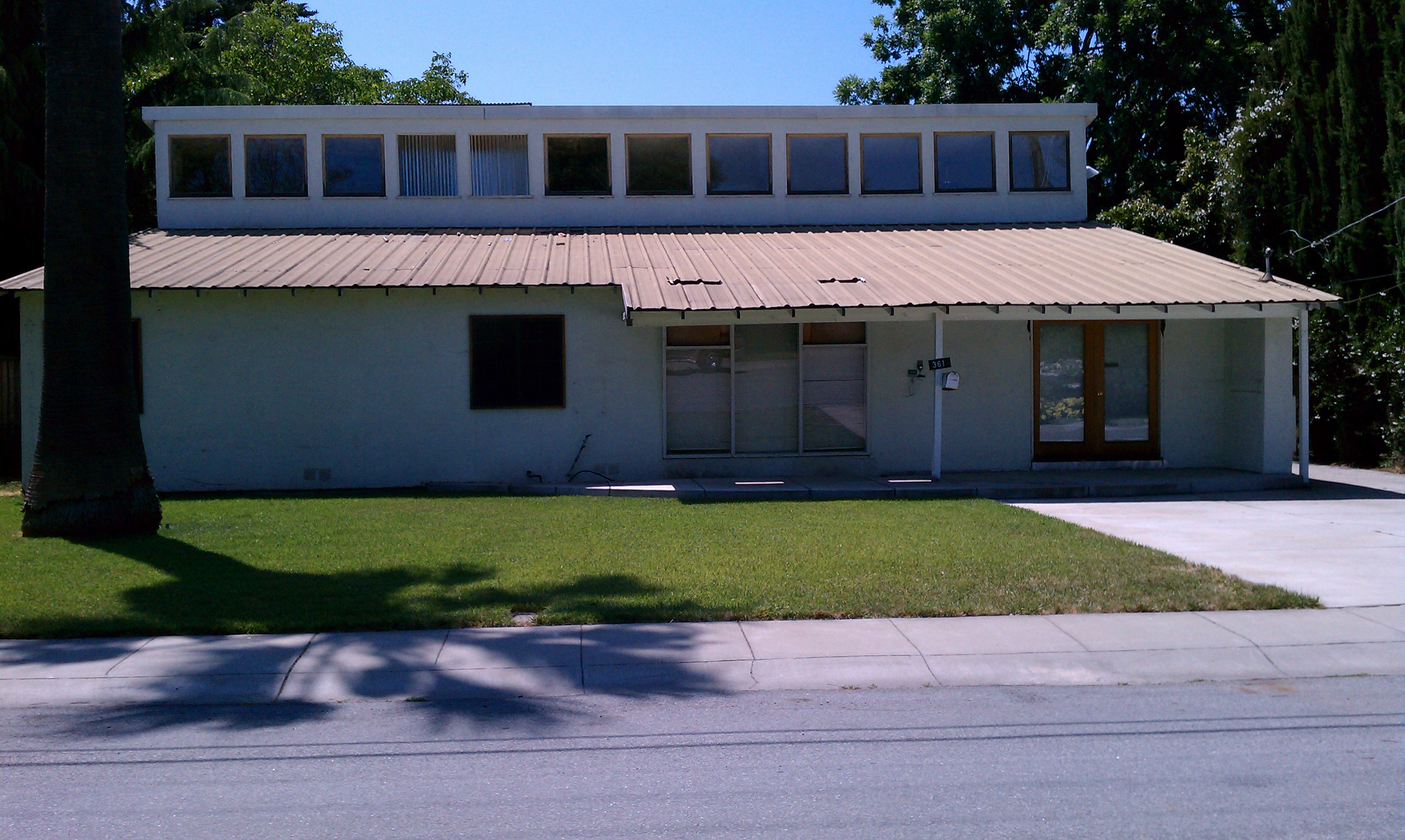
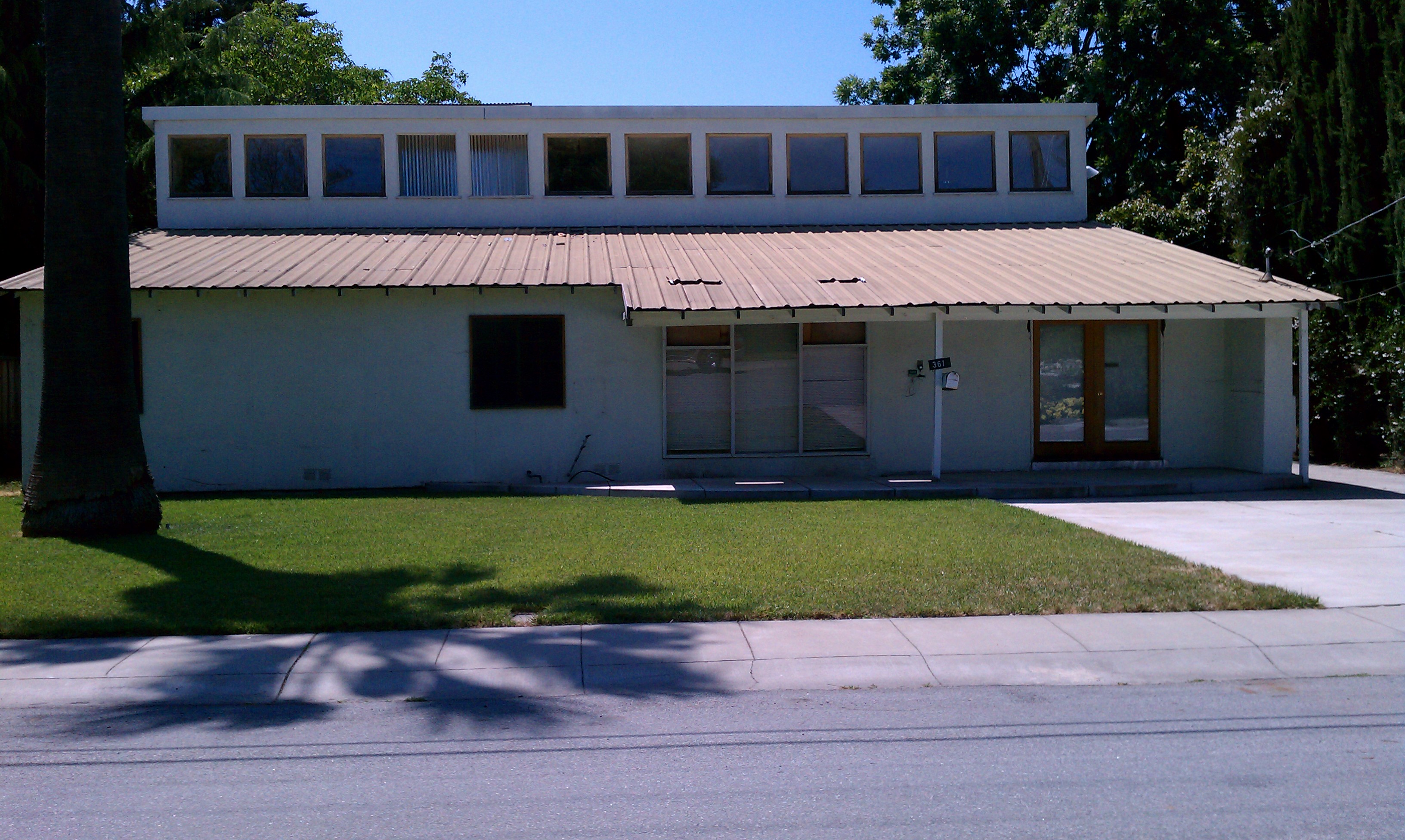
Contractors special with unlimited potential. Build your dream home in one of the most desirable neighborhoods in San Jose. While enjoying the lifestyle of Silicon Valley, with close proximity to Santana Row & Valley Fair Shopping Center & walking distance to Barnes & Noble.  This is the house you have been waiting for to call it home.

 MLS# 81123441 Contact Michael Koo for detail info. (408) 593-0304 or email to brokerkoo@gmail.com